Number Line with Negative Numbers Printable (Free PDF)
A printable number line with negative numbers is a visual math tool that displays 0 right in the center, positive numbers extending to the right, and negative numbers extending to the left. I designed these continuous horizontal lines so you can easily download and print them for free.
If you teach middle school math, you already know how difficult it is to explain abstract integers. You can use these printed tools to physically show your students how to add, subtract, and compare negative numbers. I see a massive increase in test scores when students use physical paper.
By physically jumping their pencils to the left for subtraction or to the right for addition, your students build a rock-solid understanding of absolute values. I guarantee this hands-on approach builds way more confidence than just relying on rote memorization. Print yours today and watch their grades improve instantly!
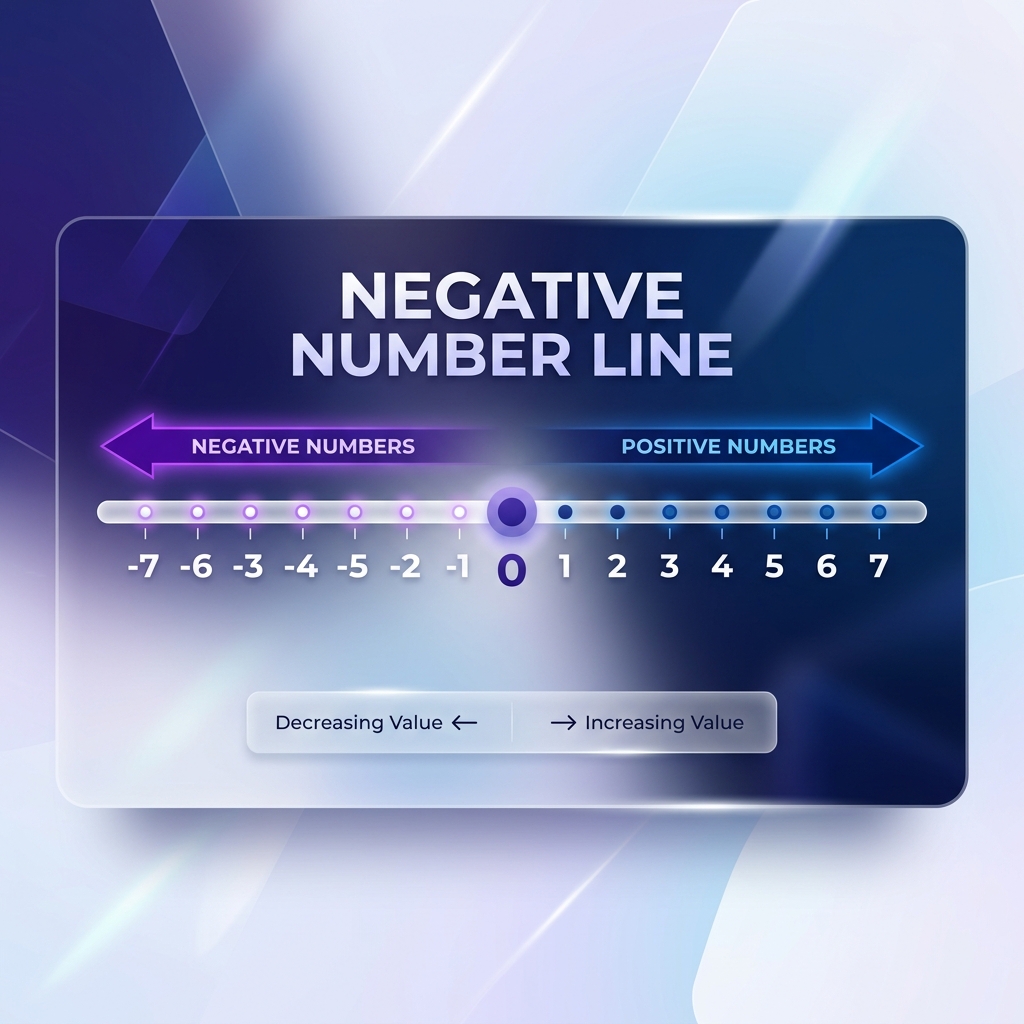
Teaching a child about negative numbers for the very first time is always a challenge. Until now, they have only known numbers as physical quantities. You have two apples. You can't have negative two apples.
This is where the brain hits a roadblock. To break past this wall, you need visual aids. You cannot just write `-3 + 5 = 2` on a whiteboard and expect a ten-year-old to instantly grasp the logic behind it. You need a physical, printed number line sitting right there on their desk.
Table of Contents
- Why Physical Number Lines Outperform Mental Math
- The Best Way to Teach Integer Addition and Subtraction
- Why Modern Gamification Fails Without Basics
- Different Variations of the Number Line
- Download Your Free Tool Now
- Frequently Asked Questions (FAQs)
- 1. How do you use a printable number line to teach negative numbers?
- 2. What is the best integer number line range for middle school students?
- 3. Why are physical printed number lines better for retention than digital math games?
Why Physical Number Lines Outperform Mental Math
Mental math is fantastic for arithmetic, but it is terrible for introducing completely new spatial concepts. When students first encounter negative integers, they often guess the answers. They try to apply the rules of positive addition to negative numbers, which leads to total chaos.
A printed horizontal line fixes this immediately. By giving students a physical tool, you turn abstract algebra into a basic board game.
If the problem is `-4 + 6`, the student puts their pencil directly on the `-4` mark. The `+` sign tells them to face right. The `6` tells them to jump forward six spaces. They physically move their pencil and land on the `2`. Suddenly, the math makes perfect sense.
The Best Way to Teach Integer Addition and Subtraction
If you want to guarantee that your students master negative numbers, you should follow this proven, three-step methodology:
- 🔴 Step 1: The Temperature Analogy. Before looking at a horizontal line, talk about a thermometer. A thermometer is just a vertical number line. Ask them what happens when it is zero degrees outside and the temperature drops by 5 degrees. They already intuitively know it becomes negative five.
- 🔴 Step 2: The Physical Jump. Print out a large number line. Have students physically hop their fingers left for subtraction and right for addition. Build the muscle memory.
- 🔴 Step 3: The Double Negative Rule. This is the hardest part. When subtracting a negative (e.g., `5 - (-3)`), explain that the minus sign means "turn around", and the negative sign means "walk backward". Turning around and walking backward means you are actually moving forward!
Why Modern Gamification Fails Without Basics
In 2026, we see a massive push toward purely digital, gamified math learning. Software programs are fun, and they keep students engaged for hours. However, many teachers are noticing a severe lack of actual retention.
When an app automatically moves a digital character along a number line, the student is passively watching. They are not doing the mechanical work. The physical act of holding a pencil, locating zero, and manually tracing the jumps across a piece of paper activates entirely different neural pathways.
Do not abandon your printed worksheets. Use digital games as a reward, but use our printable grids and lines as the foundational teaching method.
Different Variations of the Number Line
Not all classrooms need the exact same scale. Depending on the grade level, you will need different ranges. Check the table below to see what format you should print.
| Number Range | Target Grade Level | Primary Goal |
|---|---|---|
| -10 to +10 | 4th & 5th Grade | Introduction to negatives and zero crossing |
| -20 to +20 | Middle School (6th-8th) | Complex integer arithmetic and equations |
| Blank (No Numbers) | High School | Custom intervals for plotting inequalities |
If you are looking for highly authoritative lesson plans on this exact topic, we recommend checking out NCERT's Mathematics Syllabus. It provides exceptional scaffolding for teaching integers to young students.
Download Your Free Tool Now
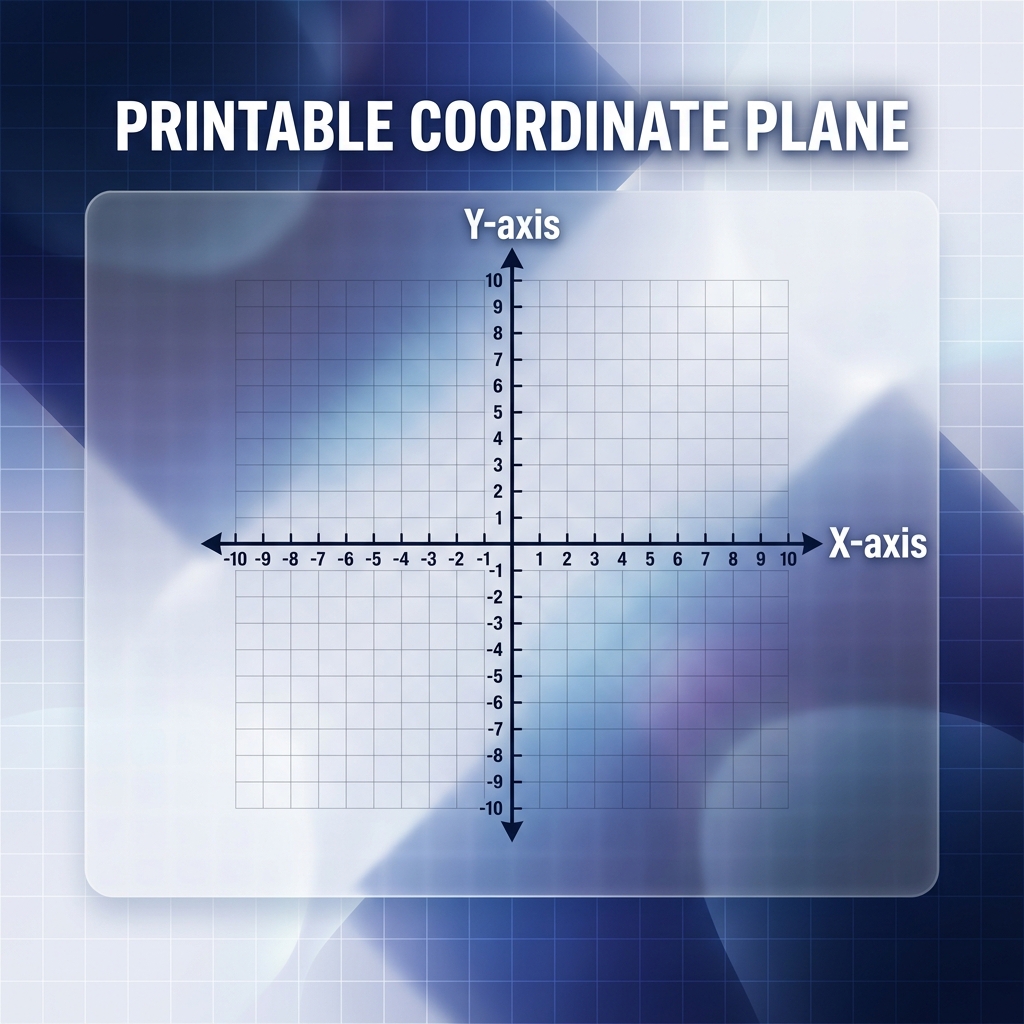
Ready to get started? Head over to our Main Graph Generator Page. While we specialize in Cartesian planes, you can easily use our single-axis settings to print out perfect horizontal number lines for your classroom.
Print them, laminate them, and tape them to your students' desks. It is the cheapest and most effective math intervention you will ever use.
Frequently Asked Questions (FAQs)
1. How do you use a printable number line to teach negative numbers?
You teach adding and subtracting negative integers by having students physically move their pencils. Starting at zero, they jump right for addition or left for subtraction, instantly building spatial awareness of negative values.
2. What is the best integer number line range for middle school students?
The absolute best range for middle school algebra is a -20 to +20 visual math integer tool. This specific scale provides enough room to solve complex linear equations without crowding the paper.
3. Why are physical printed number lines better for retention than digital math games?
A blank number line PDF forces students to actively trace the jumps themselves. This physical muscle memory creates significantly stronger neural pathways in the brain compared to passively tapping a screen on a gamified app.
💬 Discussion
0 Comments