Table of Contents
- ⚡ Quick Answer: Why is Mathematics Important in Physics?
- How Mathematics Became the Language of Physics
- India's Contribution: The Vaidya Metric and General Relativity
- 💡 Did You Know?
- Real-World Applications: How Math Powers Modern Physics
- How Students Can Visualize Math in Physics
- Conclusion: Mathematics is the Backbone of Physics
- Visualize Physics Equations on Custom Graph Paper
- Frequently Asked Questions
- What is the Vaidya Metric?
- How is math used in physics in daily life?
- What math do you need for physics?
⚡ Quick Answer: Why is Mathematics Important in Physics?
Mathematics is the fundamental language of physics. Every physical law - from Newton's laws of motion to Einstein's general relativity - is expressed as a mathematical equation. Without math, physicists cannot predict orbits, design spacecraft, model black holes, or simulate the behavior of subatomic particles. In short, physics without mathematics is like architecture without blueprints.
Have you ever wondered how scientists predict the exact trajectory of a satellite or how engineers calculate the stress on a bridge? The answer lies in the deep, inseparable connection between mathematics and physics. Mathematics provides the precise framework that transforms physical observations into testable, quantitative theories. From the ancient Greeks measuring the Earth's circumference to modern AI-driven simulations of neutron star mergers, the role of mathematics in physics has been the single most important factor in advancing human understanding of the universe.
How Mathematics Became the Language of Physics
The relationship between math and physics dates back thousands of years. Ancient civilizations used basic geometry to track celestial movements and predict agricultural seasons. However, the modern partnership between the two fields truly began with Sir Isaac Newton in the 17th century. Newton did not just discover gravity - he invented an entirely new branch of mathematics, calculus, specifically to describe the motion of objects and the forces acting upon them.
This set a precedent that continues to this day: when existing math cannot describe a physical phenomenon, physicists and mathematicians create new math to fill the gap. This is why advanced topics like differential geometry, tensor calculus, and functional analysis exist - they were developed, in large part, to solve problems in physics.
India's Contribution: The Vaidya Metric and General Relativity
One of the most remarkable examples of mathematics driving physics comes from India. Prof. Prahalad Chunnilal Vaidya (1918-2010), a mathematician affiliated with Gujarat University, discovered the Vaidya Metric in 1943. This was one of the very few known exact solutions to Einstein's notoriously complex field equations.
While Karl Schwarzschild's earlier solution described the gravitational field of a static, non-radiating star, Vaidya's breakthrough described the spacetime geometry around a radiating star - a star that is actively emitting or absorbing energy. This solution, often called the "radiating Schwarzschild metric," became critical for modern astrophysics.
Today, the Vaidya Metric is widely used to model gravitational collapse, study the formation of event horizons in black holes, and even understand Hawking radiation. His contribution is a powerful reminder that a single mathematical equation, derived on paper, can unlock secrets about objects millions of light-years away.
💡 Did You Know?
Prof. P.C. Vaidya was also a founding member of the Indian Association for General Relativity and Gravitation (IAGRG). He regarded himself primarily as a teacher of mathematics and was deeply influenced by Gandhian philosophy, balancing rigorous scientific research with a strong commitment to education and social issues.
Real-World Applications: How Math Powers Modern Physics
The role of mathematics in physics is not limited to chalkboard equations. In 2026, mathematical modeling is at the heart of virtually every technological advancement:
| Application | Mathematical Tool Used | Real-World Impact |
|---|---|---|
| GPS Navigation | General Relativity corrections | Without relativistic math, GPS would drift by ~10 km/day. |
| Medical MRI Scans | Fourier Transforms | Converts magnetic resonance signals into detailed body images. |
| AI & Machine Learning | Linear Algebra, Calculus | Powers the neural networks behind ChatGPT and image recognition. |
| Black Hole Imaging | Vaidya Metric, Tensor Calculus | Enabled the first-ever photo of a black hole (Event Horizon Telescope, 2019). |
| Bridge & Building Design | Differential Equations | Engineers calculate load, stress, and vibration tolerance. |
How Students Can Visualize Math in Physics
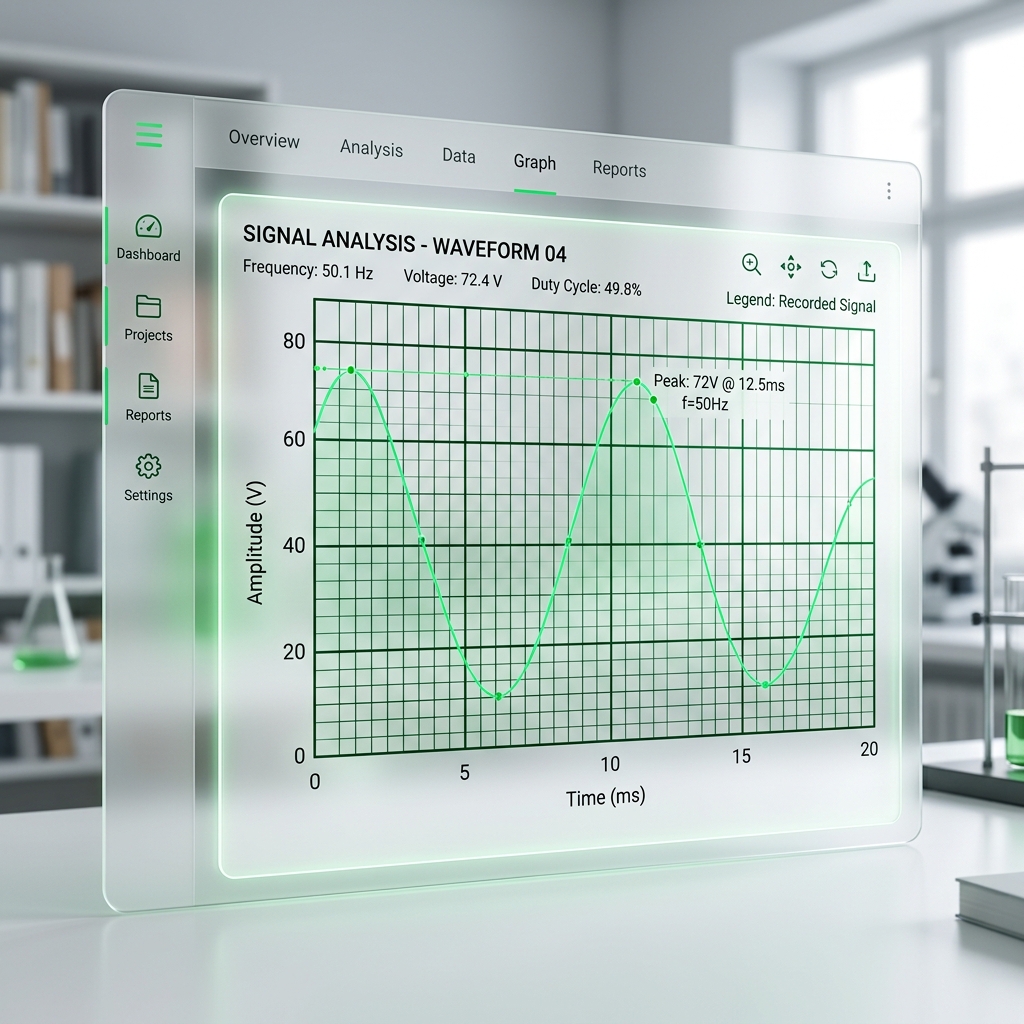
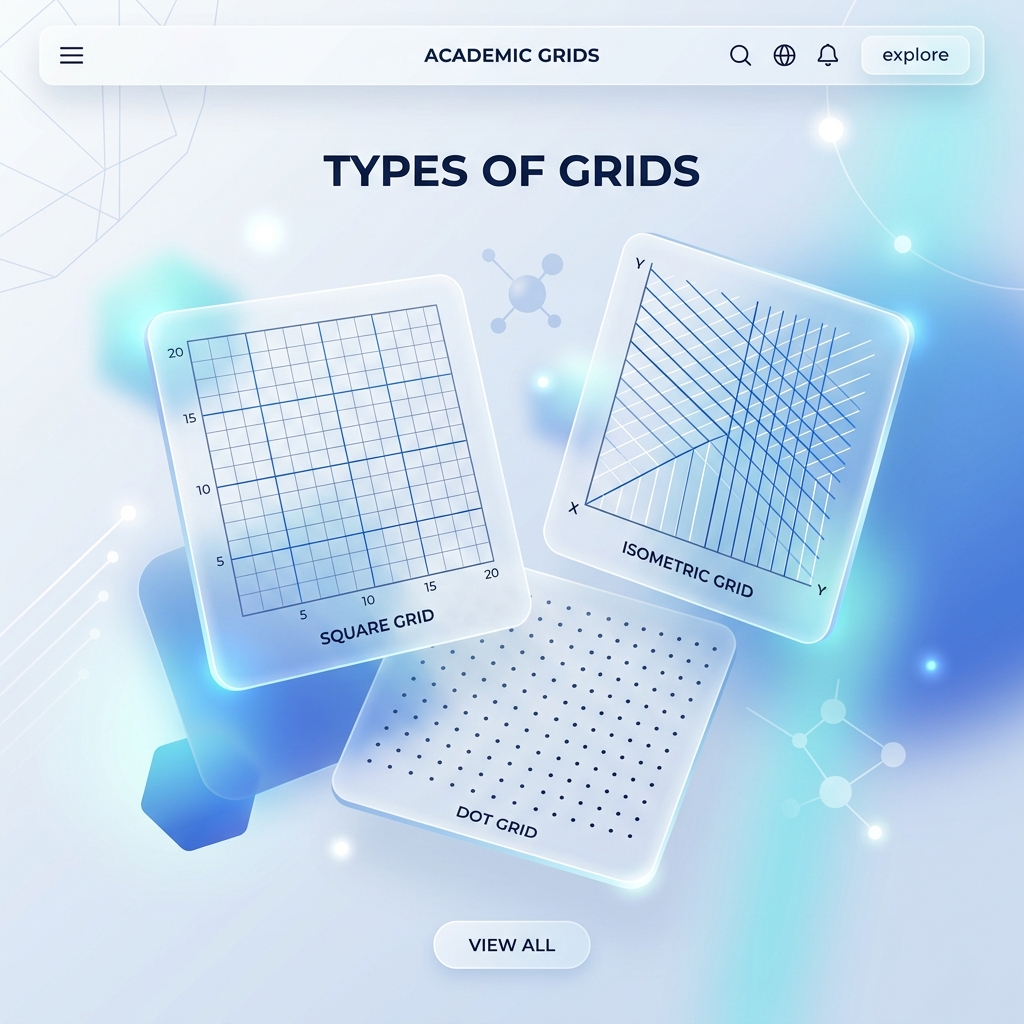
One of the biggest challenges for students learning mathematical physics is visualization. Abstract equations become far more intuitive when plotted on a graph. This is exactly why tools like graph paper and coordinate planes remain indispensable in physics education.
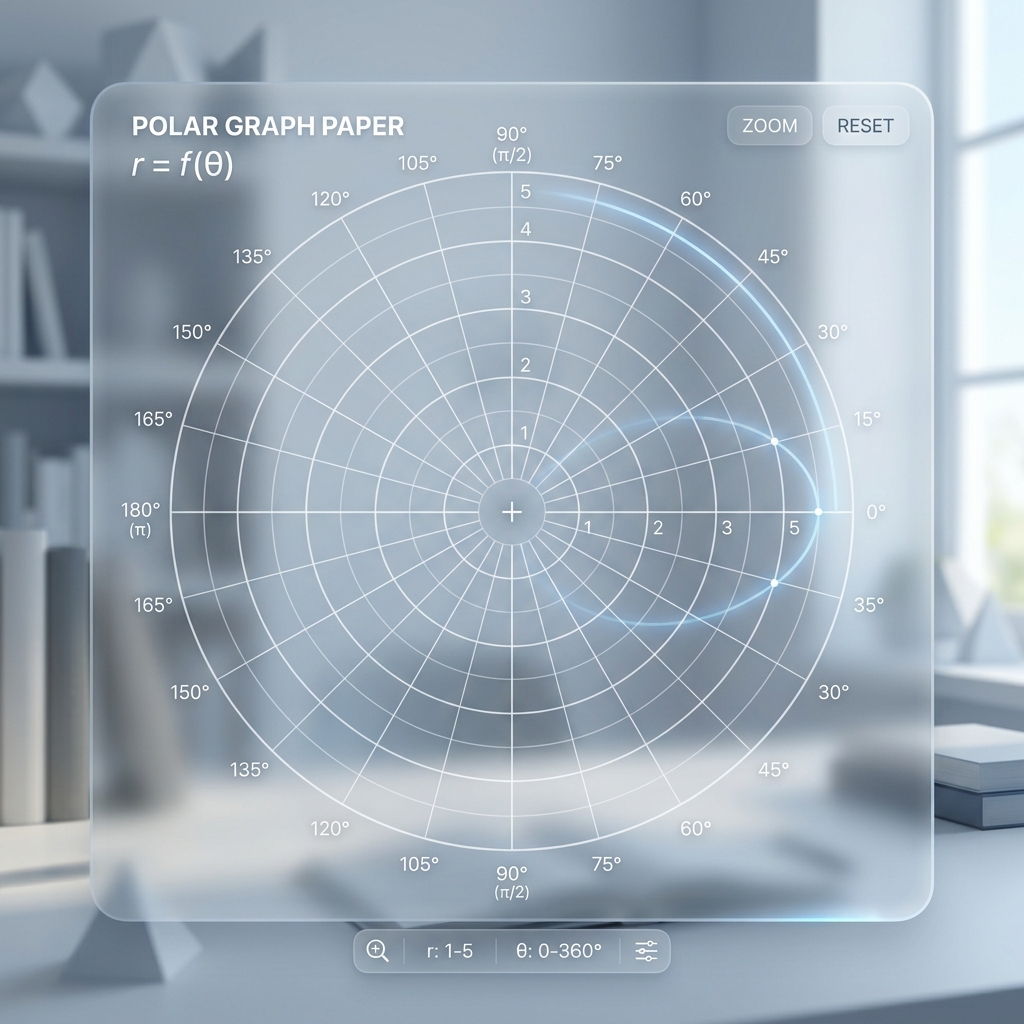
For example, plotting projectile motion on a quarter-inch graph paper helps students physically see the parabolic trajectory predicted by Newton's equations. Similarly, polar graph paper is essential for visualizing orbital mechanics and wave functions in quantum physics.
Understanding the evolution of mathematical tools - from hand-drawn grids to AI-powered digital generators - shows how the bridge between math and physics has become more accessible than ever. Whether you are an engineering student sketching force diagrams or a researcher modeling spacetime curvature, the right graphing tools make all the difference.
Conclusion: Mathematics is the Backbone of Physics
From the Vaidya Metric that models radiating stars to the Fourier Transforms that power your MRI scan, mathematics is not just a "tool" used by physicists - it is the very foundation upon which all of physics is built. Every technological breakthrough, from smartphones to space telescopes, traces its roots back to a mathematical equation that someone once wrote on a piece of graph paper.
As AI and computational methods continue to evolve, the synergy between mathematics and physics will only deepen. For students and educators looking to strengthen their understanding, the best starting point is always visualization - grab a grid paper, plot the equation, and watch abstract math come alive.
Visualize Physics Equations on Custom Graph Paper
Plot projectile paths, wave functions, and force diagrams on precision-generated grids. Download your free PDF instantly.
Launch Free Graph Paper GeneratorFrequently Asked Questions
What is the Vaidya Metric?
The Vaidya Metric, discovered by Indian mathematician Prof. P.C. Vaidya in 1943, is an exact solution to Einstein's field equations that describes the spacetime geometry around a radiating (or absorbing) star. It extended the earlier Schwarzschild solution to dynamic, non-static scenarios and is now widely used in black hole physics and gravitational collapse research.
How is math used in physics in daily life?
Mathematics underpins everyday technology powered by physics. GPS systems use general relativity corrections to maintain accuracy. MRI machines use Fourier Transforms to create body images. Smartphones rely on electromagnetic wave equations for wireless communication. Even bridge construction uses differential equations to calculate structural loads.
What math do you need for physics?
The essential math for physics includes calculus (for rates of change and motion), linear algebra (for quantum mechanics and multi-dimensional systems), differential equations (for modeling dynamic systems), and statistics (for experimental data analysis). For advanced topics like general relativity, you also need differential geometry and tensor calculus.

💬 Discussion
0 Comments